- [email protected]
- +34 961258767
- Av. del Marqués de Sotelo 3, Floor 2, Door 4, 46002 Valencia
Аккредитованный центр Института Сервантеса

Can you really learn Spanish using AI? With chatbots, smart tutors, and endless apps promising fluency in weeks, it’s a fair question. AI is changing education fast—and language learning is right in the middle of that shift.
But here’s the honest answer: Yes, you can learn with AI. No, you probably won’t become fluent because of AI alone.
Let’s break down what works, what doesn’t, and how to build a smarter strategy.
It’s absolutely possible to learn Spanish with AI, especially in the early stages.
AI tools can help you:
Many modern apps for language learning now adapt to your pace and level automatically. That flexibility is powerful—especially for busy learners.
If your goal is consistency and repetition, AI delivers.
But language isn’t just repetition.
If you’re searching for the best apps to learn Spanish, you’ll likely come across these major players:
The most widely recognized language app globally. Duolingo uses short, gamified lessons that build vocabulary and grammar in a highly accessible way. It’s ideal for beginners who want to create a daily habit, though it doesn’t prioritize deep conversational skills.
Babbel focuses more on structured dialogues and practical language use. Lessons are designed by linguists and aim to prepare learners for real-world situations. It’s a stronger option for students who want more depth than pure gamification.
Memrise emphasizes vocabulary retention through spaced repetition and exposure to native speaker videos. It’s particularly helpful for listening comprehension and expanding word banks before engaging in real conversations.
All three are solid tools. They help you build foundations. They keep you consistent. But they don’t fully simulate real communication.
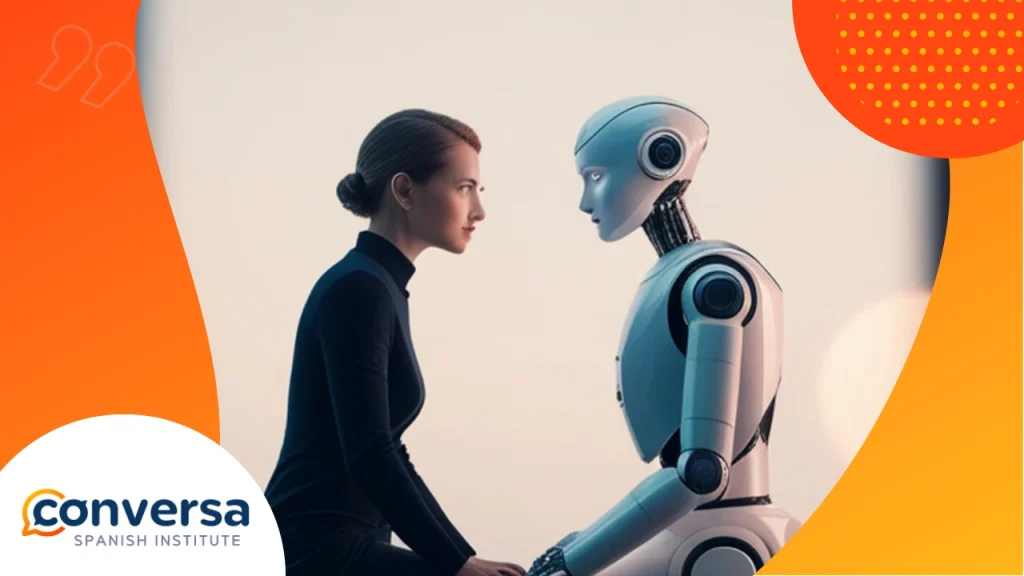
When you learn Spanish using AI, you practice in a safe, controlled environment. Real communication isn’t controlled.
In real life:
AI can simulate conversation. It cannot replicate social unpredictability.
It also doesn’t provide Культурное погружение—something that dramatically impacts fluency. If you’ve ever wondered whether destination matters, our article Is Spain a good place to learn Spanish? explains why environment shapes progress more than most learners realize.
Language is more than grammar patterns and vocabulary lists. It’s connection.
When you speak with real teachers or classmates, you:
This is why choosing the right structure matters. If you’re unsure how to evaluate programs, this guide on how to choose the right Spanish course breaks it down clearly.
And beyond structure, cultural exposure plays a huge role. Participating in festivals, daily interactions, and local traditions reinforces learning in ways apps can’t. That’s explored further in how cultural activities enhance your Spanish learning experience.
AI doesn’t attend a festival with you. It doesn’t laugh at a joke you barely understood. It doesn’t help you navigate awkward silence in a real conversation. Humans do.

Realistically? No. AI can support practice. It can correct grammar. It can simulate structured dialogue.
But it cannot replace:
Schools that focus on communication—especially those combining exposure, culture, and interaction—provide something fundamentally human.
If you’re considering immersive learning, our Практическое руководство по изучению испанского языка в Валенсии shows how location, culture, and structured teaching work together.
Technology enhances learning. It doesn’t replace it.
The best results usually come from blending tools.
Use AI and apps to:
But combine that with:
Tracking your growth with tools like a learning journal can also deepen awareness of progress. And if you’re building consistency at home, these learning strategies to practice Spanish at home can complement both AI and structured courses.
Yes—but don’t stop there.
AI is efficient. Apps are convenient. Algorithms are smart.
But fluency comes from:
If your goal is basic vocabulary, AI can get you started. If your goal is confidence, nuance, and cultural understanding—you’ll need people.
Spanish isn’t just something you process. It’s something you share.














 Русский
  English
  Español
  Italiano
  Français
  Polski