
Chaque langue possède des verbes irréguliers, ce qui signifie que tu les conjugues légèrement différemment des autres verbes. Si tu te sens déjà à l'aise pour conjuguer les verbes réguliers au présent qui se terminent par -ar, -er ou -ir, il est temps d'apprendre les verbes à changement de radical ! Qu'est-ce qu'un verbe à changement de radical ? Tout d'abord, nous devons revoir les parties d'un verbe. [...]

Have you ever heard the term “pro-drop”? It stands for “pronoun-drop” and it’s a grammatical concept that some languages have. Pro-drop might seem like something really small, but learning about it and how to use it will make you feel and sound a little more like a native speaker. Keep reading to learn about it. […]
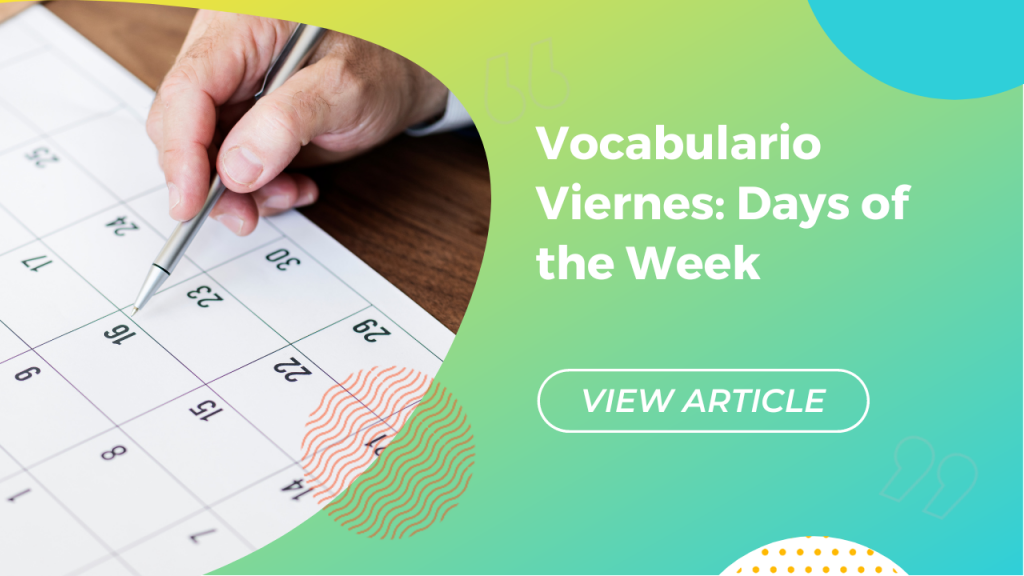
Welcome to Vocabulario Viernes! Today’s topic is days of the week, or in Spanish, los días de la semana. You use days of the week to ask what day it is, to make plans, to understand deadlines, and so much more. In this article, we’ll show you the days of the week, and a few […]

Whenever you meet someone new, it’s natural to want to put your best foot forward. You want to be kind, courteous, and not seem rude. Did you know that what one culture considers rude, another one might not? For example, in the United States, it’s not common to stare at people you don’t know because […]

Nowadays, it feels like we are always multi-tasking. You might find yourself on your phone while watching TV, scrolling while in class, texting at dinner, or listening to a podcast while writing a paper. It’s common to multi-task, but there’s a big problem with multi-lingual multi-tasking: it doesn’t work very well when you’re first learning. […]
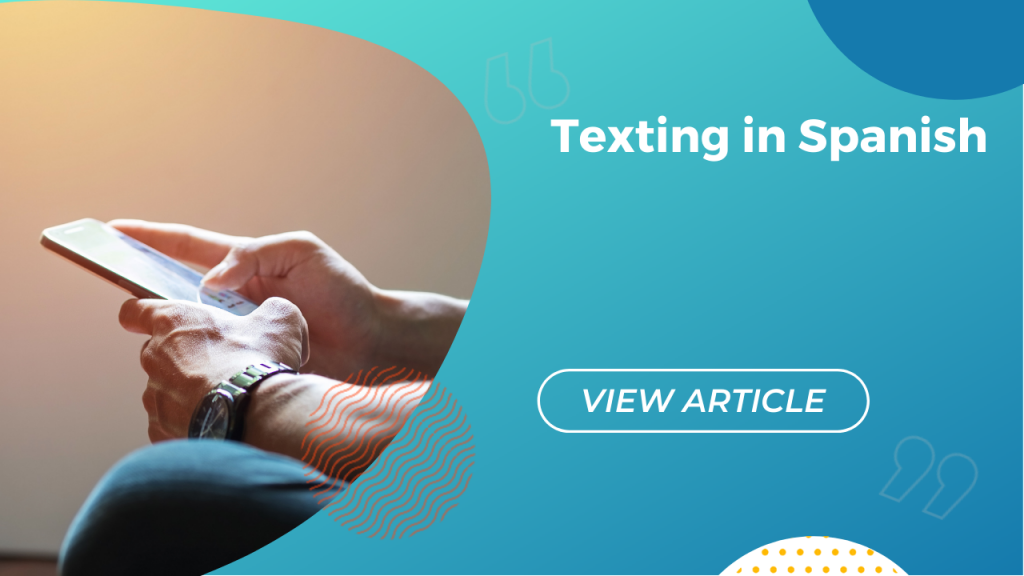
Lorsque tu commences à apprendre et à pratiquer une nouvelle langue, te faire des amis hispanophones est la prochaine étape naturelle. Tu peux pratiquer avec eux, apprendre d'eux et, avec un peu de chance, créer de nouveaux souvenirs ensemble. De nos jours, une grande partie de notre communication se fait sur Internet. Cela inclut les plateformes de médias sociaux, les messages instantanés, les courriels et tout autre site où [...]

At the very beginning of your Spanish classes, you probably learned “Me llamo…” to say “My name is…” but did you know it literally translates to “I call myself”? In fact, this introductory phrase is part of a category of verbs called reflexive verbs. There are lots of reflexive verbs in Spanish that have special […]

There’s a reason that teachers have been labeling items in their classrooms for years. The best way to learn new vocabulary isn’t by translating in your head, but rather associating images and symbols with the word in the target language. For example, you want to practice looking at a tree and thinking “árbol“, not thinking […]

La dernière fois que tu es allé au supermarché, qu'as-tu acheté ? As-tu acheté des arroz et des pollo, ou peut-être des manzanas et des zanahorias ? Un excellent moyen de pratiquer l'espagnol au quotidien est de voir quels sont les mots que tu connais en espagnol au fur et à mesure de ta vie quotidienne. Heureusement, de nombreux magasins [...]

The first time someone asks you, “¿Cómo estás?” and you confidently answer “¡Bien!” or “¡Mal! is such a good feeling! You understood a question and were able to naturally answer it. However, maybe you want to give a more detailed answer. If you’re ready to add some more exciting vocabulary to your conversations, we’ll show […]













 Français
  English
  Español
  Italiano
  Polski
  Русский