- [email protected]
- +34 961258767
- Av. del Marqués de Sotelo 3, Floor 2, Door 4, 46002 Valencia
Аккредитованный центр Института Сервантеса
В предыдущих записях мы уже рассказывали о том. Как представиться по-испански и несколько фраз, которые ты можешь использовать, чтобы начать успешное вступление. Сегодня, однако, мы собираемся немного углубиться и познакомиться с grammar behind introductions. Let’s review the Spanish verbs “ser” and “llamarse”.
Как и в английском языке, наиболее распространенными структурами являются “soy” (I am) or “me llamo” (Меня зовут). Очень просто. Но как быть, если ты захочешь спросить у собеседника его имя? Или если ты захочешь представить кого-то другого? Для этого тебе нужно будет знать все формы этих глаголов.
If you are learning Spanish you probably know that verbs are trickier than in English. The verb “ser” (to be) is irregular and its form varies considerably depending on the subject (I, you, them, etc). “Llamarse” (literally чтобы называться), on the other hand, is a regular verb, so if you know the word endings for regular verbs, you won’t find much difficulty. But it is a reflexive verb, meaning it comes with the pronoun “se” which also changes. Don’t worry if you find this explanation a bit confusing, we will explain in detail how verbs work in Spanish soon, so let’s now focus on Ser vs Llamarse.
Как уже говорилось выше, это обычные фразы, которые мы можем использовать:
So what if you want to introduce someone else? Well let’s see all the forms:
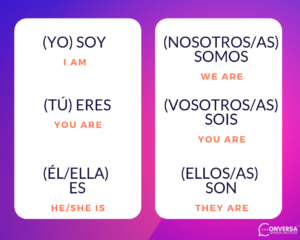
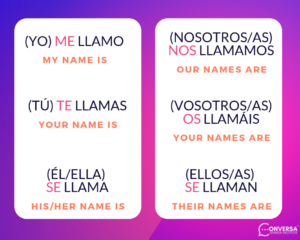
ПРИМЕЧАНИЕ: Now, we have talked about “llamarse” as “to be called”, but since this is not a structure that you typically find in English, the most fitting translation is “my/your/her… name is”.
Если тебе интересно, почему подлежащие местоимения (я, ты и т.д.) заключены в скобки, то это потому, что они не нужны, мы понимаем, о ком идет речь, по Глагол заканчивать.
Например, очень простое знакомство между тремя людьми может проходить примерно так:
As you can see, there isn’t really a difference in meaning or style between the verbs “ser” and “llamarse”. Both are perfectly adequate in any situation. Maybe “¿Cómo te llamas?” is more appropriate than “who are you?”, as the meaning behind “llamarse” is specific to names and that question may sound rude, depending on the tone or situation.
Did you get any of that? Give yourself time, and you’ll master Spanish in the blink of an eye!
Don’t forget to practice with this бесплатное онлайн-занятие И продолжай учить испанский!















 Русский
  English
  Español
  Italiano
  Français
  Polski