- [email protected]
- +34 961258767
- Av. del Marqués de Sotelo 3, piętro 2, drzwi 4, 46002 Walencja
Centrum akredytowane przez Instytut Cervantesa
We wcześniejszych wpisach mówiliśmy o Jak przedstawić się po hiszpańsku i kilka zwrotów, których możesz użyć, aby rozpocząć udane wprowadzenie. Dzisiaj jednak pójdziemy nieco głębiej i zapoznamy się z gramatyka behind introductions. Let’s review the Spanish verbs “ser” and “llamarse”.
Podobnie jak w języku angielskim, najczęściej używanymi strukturami są “soy” (Jestem) lub “me llamo” (nazywam się). Bardzo proste. Ale co się stanie, jeśli chcesz zapytać drugą osobę o jej imię? Albo jeśli chcesz przedstawić kogoś innego? Aby to zrobić, musisz znać wszystkie formy tych czasowników.
If you are learning Spanish you probably know that verbs are trickier than in English. The verb “ser” (być) is irregular and its form varies considerably depending on the subject (I, you, them, etc). “Llamarse” (literally nazywać się), on the other hand, is a regular verb, so if you know the word endings for regular verbs, you won’t find much difficulty. But it is a reflexive verb, meaning it comes with the pronoun “se” which also changes. Don’t worry if you find this explanation a bit confusing, we will explain in detail how verbs work in Spanish soon, so let’s now focus on Ser vs Llamarse.
Jak wspomniano powyżej, są to zwykłe zwroty, których możemy użyć:
So what if you want to introduce someone else? Well let’s see all the forms:
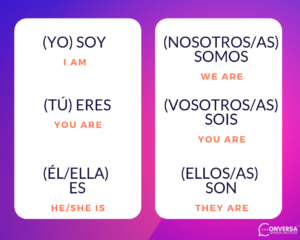
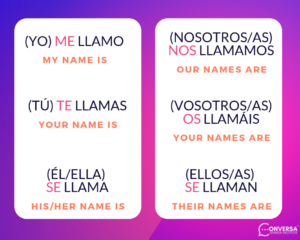
UWAGA: Now, we have talked about “llamarse” as “to be called”, but since this is not a structure that you typically find in English, the most fitting translation is “my/your/her… name is”.
Jeśli zastanawiasz się, dlaczego zaimki podmiotowe (ja, ty itp.) znajdują się w nawiasach, to dlatego, że nie są one konieczne, ponieważ rozumiemy, o kim mówimy przez końcówka czasownika.
Na przykład, bardzo proste wprowadzenie między trzema osobami mogłoby wyglądać mniej więcej tak:
Jak widzisz, there isn’t really a difference in meaning or style between the verbs “ser” and “llamarse”. Both are perfectly adequate in any situation. Maybe “¿Cómo te llamas?” is more appropriate than “who are you?”, as the meaning behind “llamarse” is specific to names and that question may sound rude, depending on the tone or situation.
Did you get any of that? Give yourself time, and you’ll master Spanish in the blink of an eye!
Don’t forget to practice with this bezpłatna aktywność online i kontynuuj naukę hiszpańskiego!
 English English
  Español
 Italiano
 Français
 Polski
 Русский