- [email protected]
- +34 961258767
- Av. del Marqués de Sotelo 3, Planta 2, Puerta 4, 46002 Valencia
Centro Acreditado por el Instituto Cervantes
En entradas anteriores, hemos hablado de cómo presentarse en español y varias frases que puedes utilizar para empezar una introducción con éxito. Hoy, sin embargo, vamos a profundizar un poco más y a familiarizarnos con la gramática behind introductions. Let’s review the Spanish verbs “ser” and “llamarse”.
Al igual que en inglés, las estructuras más comunes son “soy” (Yo soy) o “me llamo” (mi nombre es). Muy sencillo. Pero, ¿qué ocurre si quieres preguntar a la otra persona su nombre? ¿O si quieres presentar a otra persona? Para ello necesitarás conocer todas las formas de estos verbos.
If you are learning Spanish you probably know that verbs are trickier than in English. The verb “ser” (ser) is irregular and its form varies considerably depending on the subject (I, you, them, etc). “Llamarse” (literally llamarse), on the other hand, is a regular verb, so if you know the word endings for regular verbs, you won’t find much difficulty. But it is a reflexive verb, meaning it comes with the pronoun “se” which also changes. Don’t worry if you find this explanation a bit confusing, we will explain in detail how verbs work in Spanish soon, so let’s now focus on Ser vs Llamarse.
Como ya hemos dicho, éstas son las frases habituales que podemos utilizar:
So what if you want to introduce someone else? Well let’s see all the forms:
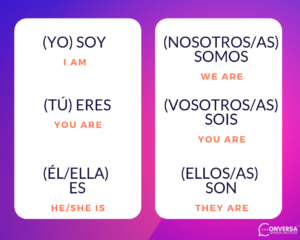
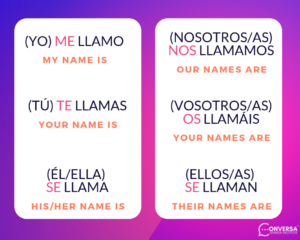
NOTA: Now, we have talked about “llamarse” as “to be called”, but since this is not a structure that you typically find in English, the most fitting translation is “my/your/her… name is”.
Si te preguntas por qué los pronombres sujeto (yo, tú, etc.) están entre paréntesis, es porque no son necesarios, entendemos de quién estamos hablando por el final del verbo.
Por ejemplo, una presentación muy sencilla entre tres personas podría ser algo así:
Como puedes ver, there isn’t really a difference in meaning or style between the verbs “ser” and “llamarse”. Both are perfectly adequate in any situation. Maybe “¿Cómo te llamas?” is more appropriate than “who are you?”, as the meaning behind “llamarse” is specific to names and that question may sound rude, depending on the tone or situation.
Did you get any of that? Give yourself time, and you’ll master Spanish in the blink of an eye!
Don’t forget to practice with this actividad online gratuita ¡y sigue aprendiendo español!















 Español
  English
  Italiano
  Français
  Polski
  Русский