
Ser vs. estar, one of the main grammatical components of A1 Spanish courses, might seem intimidating at first, but it’s not as scary as it looks. However, once you remember the rules on when to use each one, it’ll start feeling natural to you. Pay attention to the following tips to help you use ser […]

A veces, encontrar a alguien con quien practicar el habla es la parte más difícil de aprender un idioma. Tanto si te apetece charlar como si estás ansioso por hablar delante de los demás, si quieres mejorar tu pronunciación, es una buena idea grabarte. Te daremos algunos consejos para utilizar cualquier grabadora de voz que tengas [...].
Aunque pueda sonar similar a la pregunta ¿Cómo estás?, que se refiere a cómo te sientes en este momento, ¿Cómo eres? se refiere a cómo eres. Si piensas en las diferencias entre ser y estar, tiene sentido que la primera pregunta se refiera a tu estado en este momento, y la segunda a tu estado.

Todas las lenguas tienen verbos irregulares, lo que significa que se conjugan de forma ligeramente distinta a los demás verbos. Si ya te sientes cómodo conjugando verbos regulares en presente que terminan en -ar, -er o -ir, ¡entonces es hora de aprender los verbos con cambio de raíz! ¿Qué son los verbos con cambio de raíz? Primero tenemos que repasar las partes de un verbo. [...]

Have you ever heard the term “pro-drop”? It stands for “pronoun-drop” and it’s a grammatical concept that some languages have. Pro-drop might seem like something really small, but learning about it and how to use it will make you feel and sound a little more like a native speaker. Keep reading to learn about it. […]
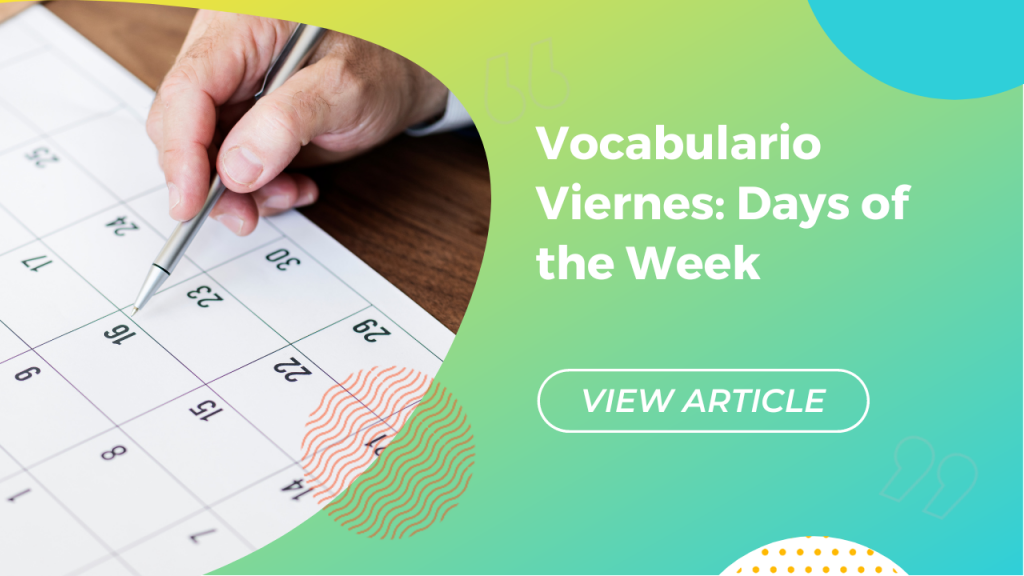
Welcome to Vocabulario Viernes! Today’s topic is days of the week, or in Spanish, los días de la semana. You use days of the week to ask what day it is, to make plans, to understand deadlines, and so much more. In this article, we’ll show you the days of the week, and a few […]

Whenever you meet someone new, it’s natural to want to put your best foot forward. You want to be kind, courteous, and not seem rude. Did you know that what one culture considers rude, another one might not? For example, in the United States, it’s not common to stare at people you don’t know because […]
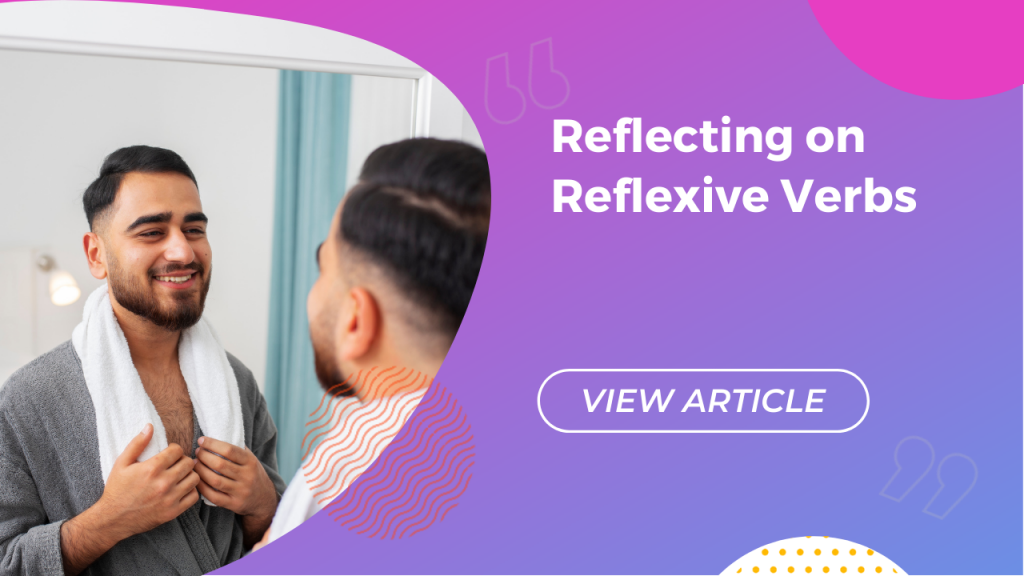
At the very beginning of your Spanish classes, you probably learned “Me llamo…” to say “My name is…” but did you know it literally translates to “I call myself”? In fact, this introductory phrase is part of a category of verbs called reflexive verbs. There are lots of reflexive verbs in Spanish that have special […]

“Me gusta” is one of the very first phrases students learn to say “I like.” However, did you know that it literally translates to “to me, it pleases”? Gustar conjugates a bit differently than other verbs, which is why we’ve dedicated this article to gustar and similar verbs. You’ll master them in no time! How […]

If you grew up as a native English speaker, you had probably never even heard of the subjunctive before. That’s because we tend not to learn grammar as a native speaker in the same way we do when we learn another language. This grammatical tense is so common, you hear it every day. Here, we’ll […]













 Español
  English
  Italiano
  Français
  Polski
  Русский