- [email protected]
- +34 961258767
- Av. del Marqués de Sotelo 3, Floor 2, Door 4, 46002 Valencia
Accredited Center by Instituto Cervantes
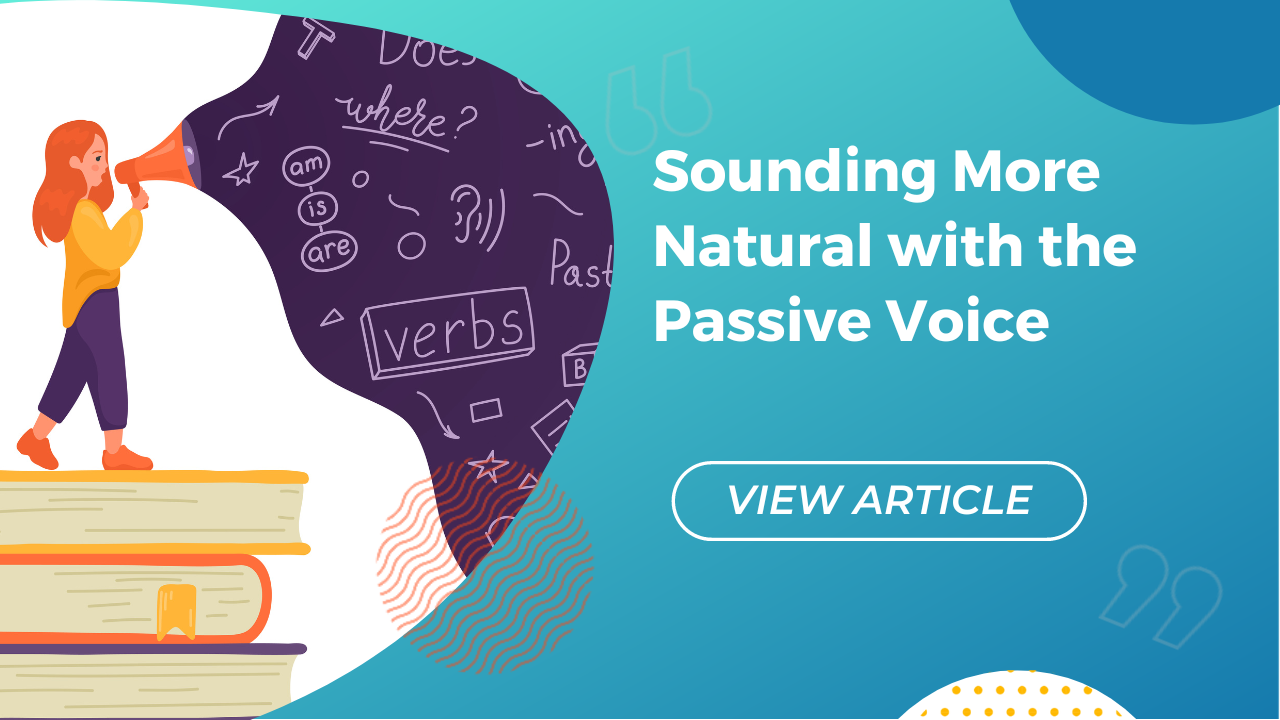
In English, it’s very common to use the passive voice in everyday speech, formal written work, and everything in between. However, in Spanish, using the passive voice as a literal translation from English can sound choppy and unnatural. It can even make you sound way more formal than you mean to!
As you’ve probably already learned, translating from English to Spanish doesn’t always make sense or sound right. Even if something is grammatically correct doesn’t mean it’s the best thing to say or write. One way to easily level up your Spanish to sound more natural is to pay attention to your use of the passive voice.
You may have heard the terms active voice and passive voice. Active voice is the most common sentence structure where the subject of the sentence performs the action. Typically, the formula is: [subject]+[verb (performed by the subject)]+[optional object]. For example, “My dog kicked the toy.” The subject of the sentence is doing the action.
However, the passive voice is the opposite. The subject of the sentence does not perform the action. Instead, the action is done to it, and the agent of the sentence may be omitted. The formula for the passive voice typically is: [subject]+[some form of the verb to be]+[past participle of a transitive verb]+[optional prepositional phrase]. For example, “The toy was kicked by the dog.”
The passive voice isn’t common in English for non-scientific papers, and is also not very common in Spanish. The passive voice tends to be wordier and not as strong as the active voice. However, in Spanish, the passive voice is even less common than in English. That’s because Spanish actually has two different ways to translate the English passive voice– the exact translation of the passive voice and the passive “se”, also called pasiva refleja. Because of this, trying to use the passive voice in Spanish is a common mistake for English speakers.
The passive “se” is far more common in daily speech. In Spanish, the passive voice is also reserved for more formal or scientific settings. However, if you want to emphasize the action instead of the subject, in Spanish, you can use the passive “se”.
To use the passive “se”, you conjugate the verb as if it were reflexive. Depending on the subject, you’ll conjugate the verb in the 3rd person singular or plural. For example, here’s how a sentence can be formed in the active, passive and passive “se” forms:
El hombre vende el periódico aquí. (active)
El periódico es vendido por el hombre. (passive)
Aquí se vende el periódico.
 English English
  Español
 Italiano
 Français
 Polski
 Русский